
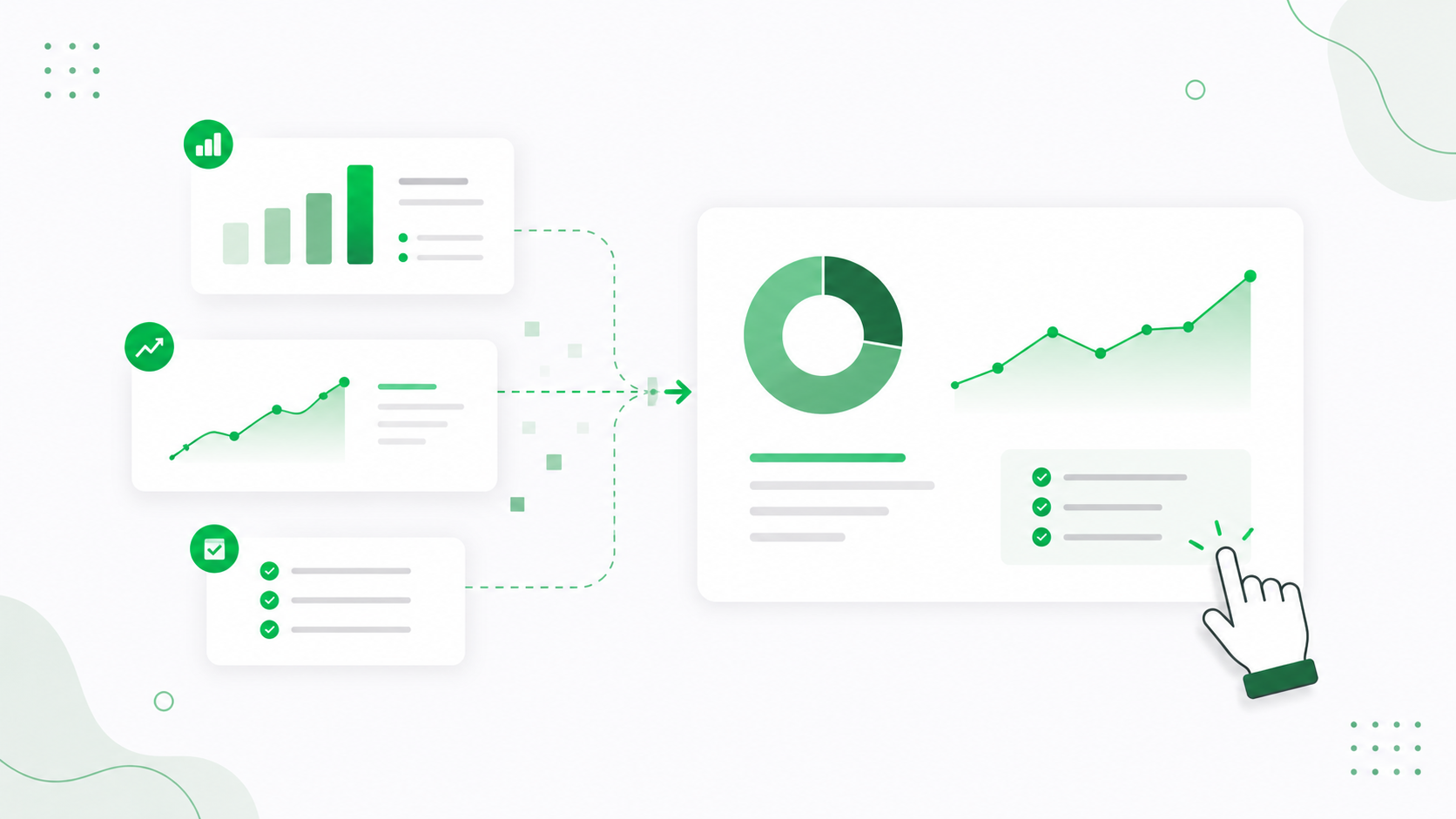
Acme Corp's CS team used to lose the better part of a day every quarter building QBR slides: exporting usage data from one system, ticket history from another, copying last quarter's roadmap commitments from a doc nobody had updated since it was written. The first time they used a generator, the deck was ready in four minutes. Then a CSM read it and pulled every single slide about the champion transition, because the deck had no way of knowing the account's real story had changed three weeks earlier.
That is roughly where AI QBR deck generation actually sits today: excellent at the parts that are mechanical, and completely blind to the parts that require knowing the account. Teams that treat it as a slide-formatting tool get real time back. Teams that treat it as a finished deck get a QBR that reads correct and lands wrong.
What a deck generator actually automates well
Pulling usage, ticket, and billing data from wherever it lives and turning it into a formatted narrative is a data-assembly problem, and AI is genuinely good at data-assembly problems. So is comparing this quarter's numbers against last quarter's, flagging the metrics that moved, and drafting the roadmap-commitment slide from whatever was promised last time. This is the same category of manual work that used to eat a full day of QBR prep time, and it disappears almost entirely once a generator has clean access to the underlying systems.
What comes out the other end is a correct first draft. Correct is not the same as ready, and the gap between the two is where most of the actual judgment in a QBR still lives.
What still needs a human in the room
A generator has no way of knowing that the champion who used to sponsor the account just left, that the last call ended tensely, or that this particular executive only responds to numbers framed against their board commitments. Deciding what to lead with when an executive is in the room, and what to leave in the appendix, is a judgment call about the specific relationship, not a formatting decision a template can make.
The generator also does not know which flat metric is actually a warning sign versus normal seasonal variation for that specific account, and it will not soften or sharpen a message based on where the relationship genuinely stands. Those are still calls only the CSM can make, informed by the draft rather than replaced by it.
Three mistakes that cause the most damage
Treating the generated deck as final, not a draft
The fastest way to turn a genuinely useful tool into a liability is to present the AI's first draft to a customer without a CSM reading it first. A generator has no way to catch that a metric looks fine in aggregate but reflects a single power user masking a stalled team, or that a slide references a stakeholder who left the company last month. Those errors are invisible in the deck and immediately visible to the customer reading it.
Using the same template regardless of account risk level
A healthy, expanding account and one three weeks from a renewal decision should not get structurally identical decks. The healthy account can lead with the roadmap. The at-risk account needs the outcome and the risk addressed in the first two slides, or the meeting goes the same way an unfocused executive QBR always goes: politely attended, and nothing decided.
Not tracking what gets corrected, and why
Every time a CSM fixes something in a generated draft before it reaches a customer is a data point about where the tool's blind spots actually are. Most teams make the fix and move on without ever logging it, so the same category of mistake, a stale stakeholder name, a metric read without its context, keeps recurring quarter after quarter instead of getting flagged as a pattern worth fixing upstream.
"RetainSure helped Mailmodo's CS team crack upsell at scale. By zeroing in on high-potential self-serve accounts and providing personalised email drafts, the team saw a 20x ROI from their very first month on the platform."
Sanjana Shankar, Head of Customer Success · Mailmodo
What a realistic AI-assisted QBR workflow actually looks like
The generator pulls the data, drafts the structure, and flags the metrics that moved since last quarter. A CSM reviews the draft against what they actually know about the relationship, reorders it based on the account's risk level, and corrects anything the tool got mechanically right but contextually wrong. What used to take a full day now takes twenty minutes of review on top of four minutes of generation, and the deck that reaches the customer has a human's judgment in it, not just a template's output.
RetainSure drafts the deck so your CSM only has to judge it, not build it.
Data pull, structure, and roadmap tracking automated. The call on what the account needs to hear stays with your team.
Acme Corp's CS team still gets the deck in minutes. They just don't send it in minutes. The draft goes to the CSM first, the champion-transition slide gets rewritten in the customer's actual current terms, and the meeting that follows sounds like someone who knows the account, because someone still does.
How to check whether your team has drifted toward unreviewed drafts
This doesn't require watching every QBR to find out. Pull the last ten generated decks that actually went to customers and check how many still contain the timestamp or watermark most generators leave in a draft's metadata, unedited from generation to send. A high proportion sent within minutes of generation, with no meaningful gap for review, is the exact pattern that eventually puts a stale detail in front of a customer.
The second check is a simple team habit: ask each CSM to name, from memory, the last correction they made to a generated draft. A team where everyone can answer immediately is actively reviewing. A team where the question gets a blank look has quietly stopped treating the draft as a draft, whatever the original workflow intended.