
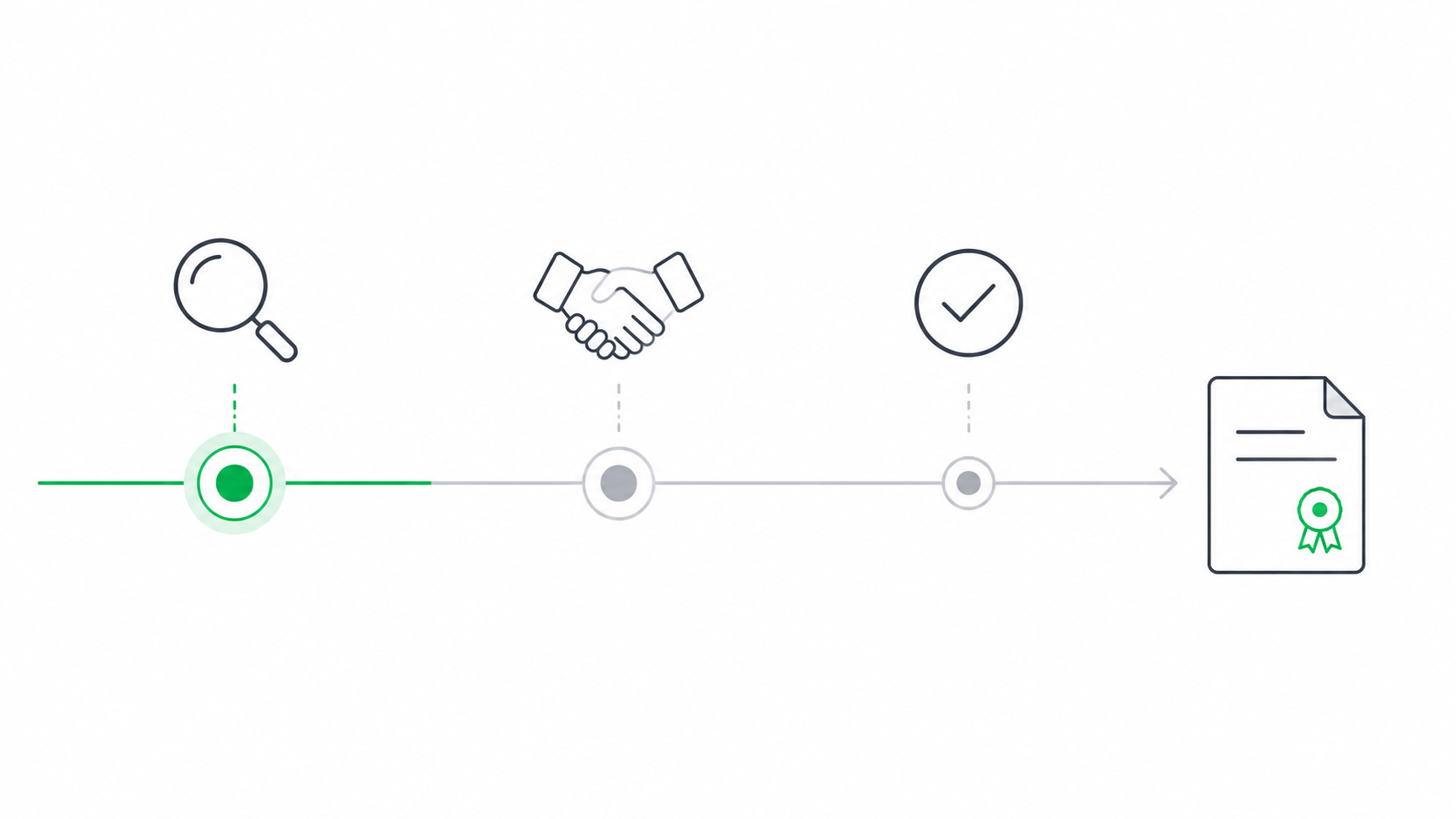
The contract ends March 31. The first conversation about renewal happens March 14. The customer has already been talking to two competitors since January. By the time the CSM sends the renewal proposal, the internal decision has been made, and the CSM does not know it yet.
This is not a rare scenario. It is the default for teams without a renewal playbook that starts at day minus-90. Most teams have a renewal process. Almost none of them start it early enough for it to matter.
Why 90 days is the number
Ninety days is the minimum time required to execute the interventions that actually change renewal outcomes for at-risk accounts. An executive conversation takes three to four weeks from signal to meeting. A value case that survives CFO scrutiny takes two to three weeks to assemble properly. None of these things can be compressed into 14 days.
The 90-day window also matters because it is the last point at which you can realistically influence the stakeholder map. A new champion who arrived in August and is leading the renewal evaluation in December had four months to form opinions about your product without structured input from your team. At day minus-30, you are introducing yourself to someone who already has a view. At day minus-90, you have time to shape it.
The number is not arbitrary padding on top of a normal sales-style timeline, it is backed into by what the interventions themselves actually require in sequence. The stakeholder audit has to happen before the value case can be written for the right audience. The value case has to exist before the executive conversation can be scheduled with anything substantive to discuss. And the executive conversation has to happen before the proposal, or the proposal is the first time the decision-maker hears the case at all. Compressing any one of those steps compresses all the ones after it.
The playbook week by week
Days 90 to 75 — the stakeholder audit
The first thing a well-run renewal motion does at 90 days is map the account's stakeholder layer. Who are the current champions, who are the economic buyers, who has joined since the last renewal, who is missing from the relationship. The accounts that churn because of a new CFO or a champion replacement all had this pattern: the relationship map was out of date and nobody checked it.
Days 60 to 45 — the value case
Most CS teams build the value case the week before the renewal conversation. By then it is reactive. Teams that win renewals consistently build it at day minus-60, which means they have time to find the gaps, fill them, and walk into the renewal conversation with evidence built for this customer's priorities rather than pulled from a template the night before. The value case should answer three questions: what did we get for what we paid, what would we lose if we did not renew, and what is the case for expanding. All three answers need to be in the customer's language, not CS metrics.
Days 45 to 30 — the executive conversation
The conversation with the decision-maker should happen at day minus-45, not day minus-7. At day minus-45, the budget cycle is open, the evaluation has not started, and the executive has time to engage strategically. At day minus-7, you are asking them to approve something someone else has already recommended one way or the other. This outreach is not a renewal conversation. It is a strategic checkpoint. The renewal itself comes up at the end, not the start.
RetainSure surfaces renewal risk at day minus-90 automatically.
Stakeholder changes, engagement gaps, and signal shifts flagged before the 90-day window opens, so you never start the playbook late.
What teams without a playbook skip every time
When we trace churned accounts in our customer base back through the 90 days before renewal, three patterns appear consistently. The stakeholder audit got skipped, teams assumed they knew who mattered and were frequently wrong about new arrivals. The value case was built from internal metrics rather than customer outcomes, a health score of 72 is not a value case. And the executive conversation happened at day minus-7, or not at all, CSMs are comfortable talking to champions, less comfortable reaching out to the economic buyer.
What makes these three patterns dangerous is that each one looks fine in isolation right up until renewal week. A stakeholder map that's a few months stale doesn't look broken, it looks like a normal CRM record. A value case built from internal metrics still produces a document that looks like a value case. The gap between looking fine and being fine only becomes visible once the renewal conversation is already underway, which is exactly the point at which there's no more runway left to fix any of it.
Where the playbook breaks down at scale
The 90-day playbook works. The problem is running it across 60 accounts simultaneously. In practice, the playbook gets followed for the top five accounts. The other seven get a shortened version starting at day minus-30. Three of those seven are the ones that churn.
The teams that actually run the full playbook across their whole book are the ones using AI to handle the monitoring layer, not the conversation, not the relationship, but the constant watch that tells you which account needs the stakeholder audit now, which one has a new VP who has not been introduced, which one's engagement dropped three weeks ago. That watch, running automatically every day, is what makes the 90-day playbook executable at scale rather than aspirational in a spreadsheet.
How to prioritize which accounts get the full playbook
Not every account needs the full ninety days run at full intensity at the same time, and pretending otherwise is part of why the playbook collapses down to the top five accounts by default. The fix is prioritizing deliberately instead of by accident: cross-reference which accounts have a renewal date inside the current quarter against which of those already carry elevated risk. That intersection, not simply the highest-MRR accounts, is the group that earns the complete stakeholder audit and a custom-built value case.
Everything outside that intersection still gets a playbook, just a proportionally lighter one, a shorter stakeholder check instead of a full audit, a templated value summary instead of a bespoke case, starting closer to day minus-45 instead of day minus-90. The distinction that matters is that this is a deliberate triage decision made in advance, not the same neglect that used to happen to the bottom seven accounts by default, just given a name.