
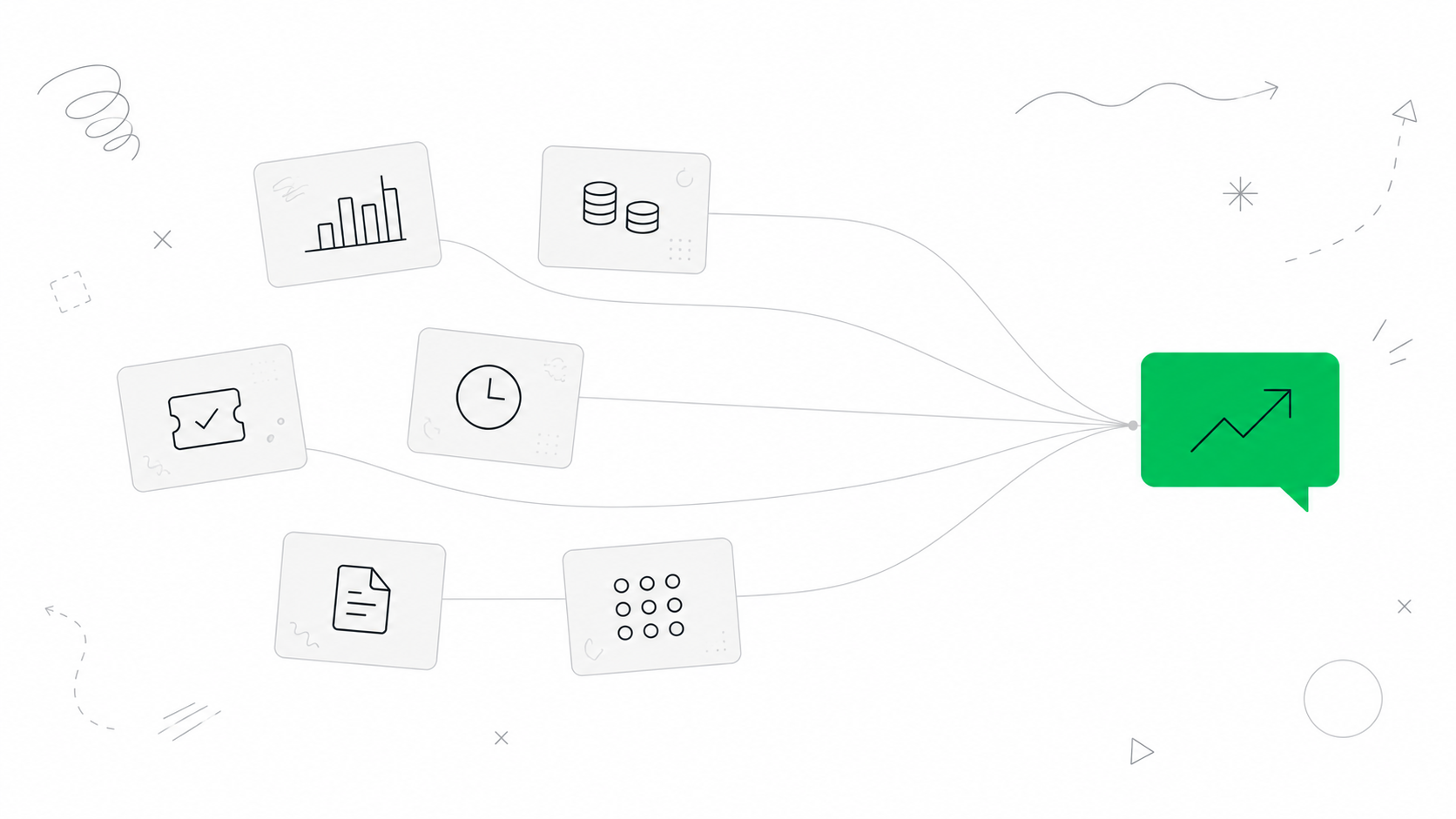
Priya is four minutes into a renewal call with a 60-person customer success team when the VP on the other end asks if RetainSure can handle expansion tracking too, not just renewal risk. Priya did not know that question was coming. She pulls up the account while she talks: usage on the reporting module has been climbing for five months, three new seats were provisioned last quarter without a corresponding upgrade, and a support ticket from February asked, almost in passing, whether the plan supported multi-team workspaces. The interest was sitting in the account the whole time. Nobody connected it until the customer said it out loud.
This is the gap AI copilots are being built to close. Not replacing the renewal or upsell conversation, but making sure the CSM walks into it already knowing what Priya had to discover live, on the call, in real time.
What an AI copilot actually does in the call
An AI copilot for renewal and upsell conversations is not a chatbot that talks to customers. It is a layer that prepares the CSM before the call and surfaces context during it. In practice, that breaks into three jobs.
Pre-call assembly. Before the conversation starts, the copilot pulls usage trends, seat and billing history, support ticket themes, and prior call notes into a single brief. It flags what changed since the last touchpoint rather than making the CSM dig for it. A health score alone would have told Priya the account was stable. It would not have told her that the reporting module usage had tripled.
Signal to talking point. Raw data does not close renewals. The copilot's job is to convert a pattern, rising usage in one module plus a support question about workspaces, into a specific conversation starter the CSM can actually use. This is the difference between a dashboard and a copilot: a dashboard shows the number, a copilot tells you what the number means for this call.
Live reference during the conversation. Some copilots now surface context mid-call, pulling up the answer to a customer's question about their own usage history without the CSM needing to switch tabs or stall. This matters most in renewal conversations, where a CSM caught flat-footed on a billing detail loses credibility at the exact moment they need it most.
Why the signal gets missed without one
Expansion signals are quieter than churn signals. A dropping usage curve triggers alarm. A rising one, spread across five months and three separate systems, rarely triggers anything. Nobody is watching for good news the same way they watch for bad news.
Add caseload to that. Gainsight's 2025 State of Customer Success report put the average CSM at 40 to 80 accounts. At that ratio, a CSM has time to prepare deeply for the accounts flagged as at risk and the accounts closest to renewal. The account quietly outgrowing its plan, with no ticket marked urgent and no NRR alert attached to it, waits for someone to notice on their own time. Often, that someone is the customer.
Where AI copilots break down
Not every copilot earns a place in the call. The ones that fail tend to fail in one of three specific ways.
The script problem
A copilot that hands the CSM a script kills the read of the room that makes a renewal or upsell conversation work. The moment a CSM starts sounding like they are reading from a card, the customer notices, and the trust the conversation depends on erodes. The tools that work surface facts and patterns. They do not tell the CSM what to say.
The context problem
A copilot built on one data source, usually the CRM, tells a partial story. It might show that a deal is renewing on schedule while missing that churn risk is building in a different part of the account, or that the champion who signed the original contract left the company two months ago. A brief built from one system is a brief built on a blind spot.
The trust problem
CSMs stop opening tools that add steps instead of removing them. A copilot that requires manual data entry before it can generate a useful brief is asking the CSM to do the work twice. The copilots that get used are the ones that assemble themselves from data the team already has, sitting in front of the CSM before they think to ask for it.
"Accurate predictions and concise, actionable explanations of churn risk saving my team 2+ hours daily. I love that it reflects the right reasons accounts are at risk without us handcrafting a health score."
Wendy Zingher, VP of Customer Success · LambdaTest
What it looks like when it works
The teams that get real value from an AI copilot treat it as preparation infrastructure, not a replacement for the conversation itself. The copilot does the digging. The CSM does the judgment: reading tone, deciding what to lead with, knowing when to push and when to listen.
RetainSure surfaces the expansion signal before the renewal call starts.
Account briefs built from usage, billing, support, and stakeholder history, assembled automatically, not typed in by a CSM the night before.
When the brief is ready before the CSM opens the account, the conversation changes shape. Instead of discovering the expansion opportunity because the customer mentioned it, the CSM raises it first, with the specific usage pattern already in hand.
Priya's account renewed. The upsell conversation happened two weeks later, once she had pulled the reporting module data together herself. With a copilot in place, that would have been the same call. The signal was already there. It just needed a system built to notice it before the customer had to say it out loud.