
Acme Corp's three-person CS team hit a wall the same month two things happened at once: the book had grown past what anyone could comfortably cover, and leadership had budget for exactly one more investment that quarter. The debate ran a full quarter, hire a fourth CSM or buy another automation tool, and the team ended up doing a little of both, in the wrong order. They automated a workflow that was already running fine and hired someone into a role that was mostly still going to be eaten by manual data-pulling. Six months later the bottleneck hadn't moved.
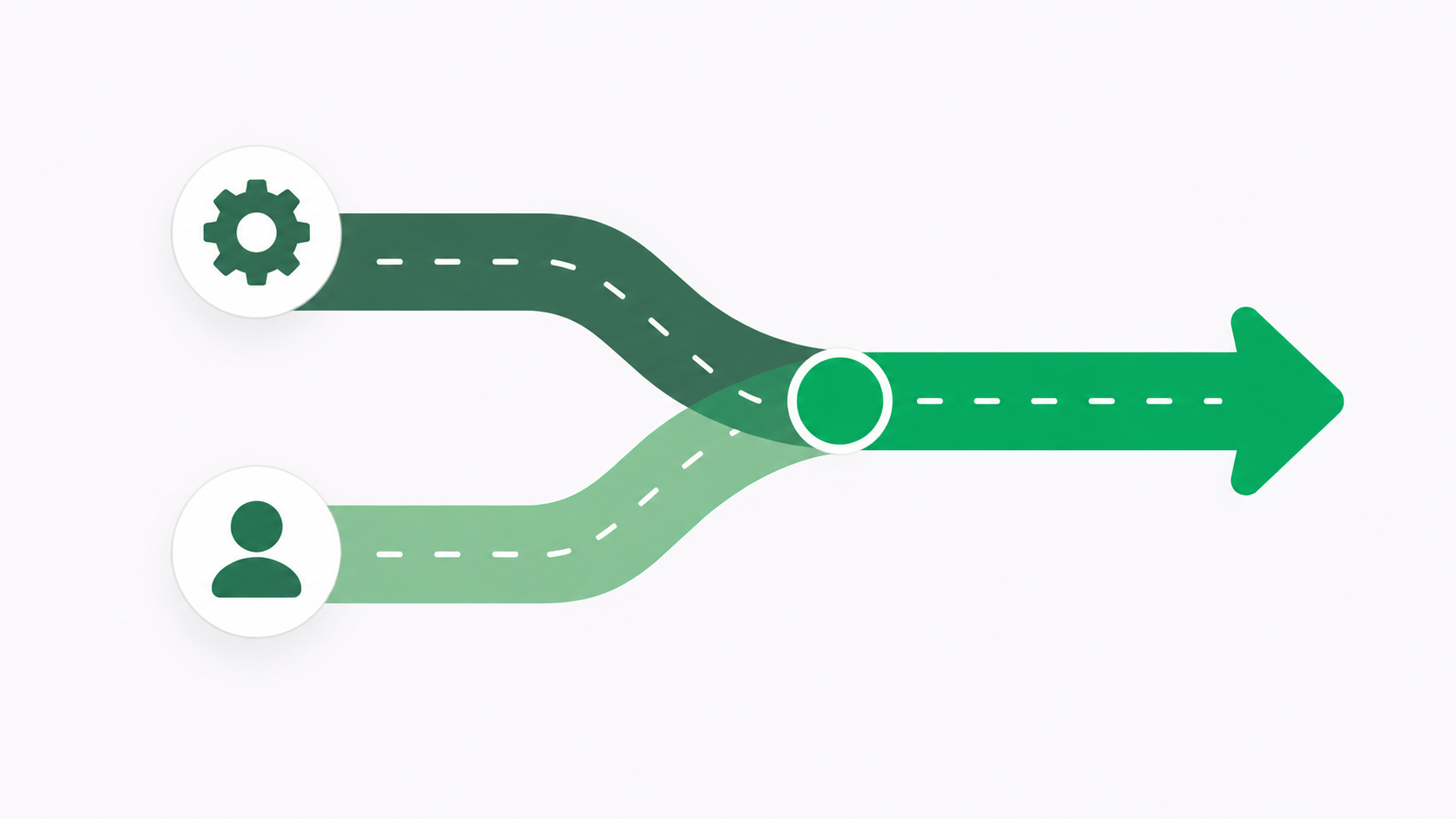
Automate-or-hire gets framed as a single either-or decision, but it is really a sequencing question, because automation and headcount solve two different bottlenecks. Automation removes repetitive, mechanical load. Headcount adds judgment and relationship capacity. Buying the wrong one first doesn't just waste the budget, it leaves the actual constraint exactly where it was.
Why "automate vs hire" is usually the wrong frame
The question sounds like a single choice because both options compete for the same limited budget line, but they are not substitutes for each other. A team drowning in manual usage-dashboard checks does not get relief from a new hire doing the same manual checks, it gets relief from automating the checking. A team where the bottleneck is judgment calls, deciding what a risk signal actually means for a specific relationship, does not get relief from more automation, because a tool cannot make that call any better than the one it already made.
Conflating the two means a team ends up spending on whichever option feels more available that quarter, a tool that was easy to demo or a headcount line that was already approved, rather than on whichever one actually matches where the real bottleneck sits.
The test for which one to invest in next
The first half of the test is mechanical: does the bottleneck have a repeatable trigger and a consistent shape, the same category of work regardless of which account it touches. Pulling usage data, formatting a QBR deck, flagging an upcoming renewal date, these are automation candidates because the shape of the task never changes, only the account name does. The same two-question test that applies to any single workflow scales up to team-level capacity planning without needing a different framework.
The second half is judgment: does the bottleneck require reading a specific relationship, weighing context a rule cannot see, or making a call that would come out differently depending on which customer it is. A rising ticket count means something different for an account that just onboarded a new team than for one that has been stable for two years, and telling those apart is exactly the kind of read that headcount buys and automation cannot.
Most lean teams are not purely one or the other, they are carrying both bottlenecks at once, which is exactly why the sequencing question matters more than the binary choice. Automating the mechanical bottleneck first is almost always the higher-leverage move when both exist together, because it is cheaper, faster to deploy, and it frees existing headcount capacity before a single new dollar goes toward a hire. A team that automates first and then hires is spending once to fix two problems in sequence. A team that hires first to cover mechanical work is spending twice, once on the hire, and again later when that same work eventually gets automated out from under them anyway, the same way a sustainable ratio depends on how much of the work is already automated, not just on raw headcount.
The mistake that causes the most damage
Hiring to cover work that should have been automated first
Adding a person to manually do mechanical, repeatable work solves the immediate capacity problem and creates a new one: that person's time is now anchored to work that eventually gets automated anyway, and the team is left re-training around a role that should never have been defined that way. The hiring decision works best once the mechanical load is already off the table, so the new hire's time goes entirely toward judgment work from day one.
Automating past the point where judgment is the actual bottleneck
A team can keep buying more automation tools long after the real constraint has shifted to judgment capacity, more flags being generated than anyone has time to actually act on. At that point, another tool adds noise, not relief, and the fix is headcount, not another dashboard.
Treating the automate-or-hire decision as permanent
The sequencing call made this quarter is not a decision that holds forever, because the bottleneck moves as the book grows and as automation coverage expands. A team that automates its mechanical bottleneck and hires correctly still needs to run the same test again months later, once the book has grown enough that a new mechanical bottleneck has quietly formed, or the judgment load has grown past what current headcount can absorb. Treating last quarter's answer as standing policy is how a team ends up over-hired against work automation could now handle, or under-staffed against judgment calls nobody budgeted for.
"RetainSure helped Mailmodo's CS team crack upsell at scale. By zeroing in on high-potential self-serve accounts and providing personalised email drafts, the team saw a 20x ROI from their very first month on the platform."
Sanjana Shankar, Head of Customer Success · Mailmodo
What a realistic lean-team investment sequence actually looks like
Name the bottleneck honestly before spending against it. Automate the mechanical load first, because it is cheaper, faster to deploy, and frees existing headcount capacity immediately. Only once the mechanical load is genuinely handled does the next hire go entirely toward judgment and relationship work, which is exactly the work that makes that hire worth the cost. Revisit the sequence every time the book grows, because the bottleneck moves as the team does.
How to actually run this test on your own team this quarter
The two-question test is only useful when it's run against real data, not a gut feeling about who seems busy. Start with a single week: have the team log every recurring task, however small, usage checks, ticket triage, QBR prep, stakeholder outreach, and tag each one as mechanical or judgment as it happens, not retroactively, because memory tends to round everything up to "important work" after the fact.
At the end of the week, add up the hours in each bucket. A team spending the majority of its week on mechanical, repeatable tasks has an automation bottleneck, regardless of how busy anyone feels. A team where the mechanical layer is already thin and most hours go to genuinely account-specific judgment calls has a capacity bottleneck, and no amount of additional tooling will relieve it. The exercise takes one week and settles an argument that can otherwise run an entire budget cycle on opinion alone.
RetainSure clears the mechanical bottleneck before your next hire has to.
Automated monitoring and flagging, so a new hire's time goes straight into judgment work, not manual data-pulling.
Acme Corp's next quarter looked different. A one-week task log across the team showed exactly where the hours were going, manual usage checks eating a third of the team's week, and that got automated first. The fourth hire came two months later, and every hour of that new CSM's time went into account relationships from day one, not into work a tool should have already been doing.