
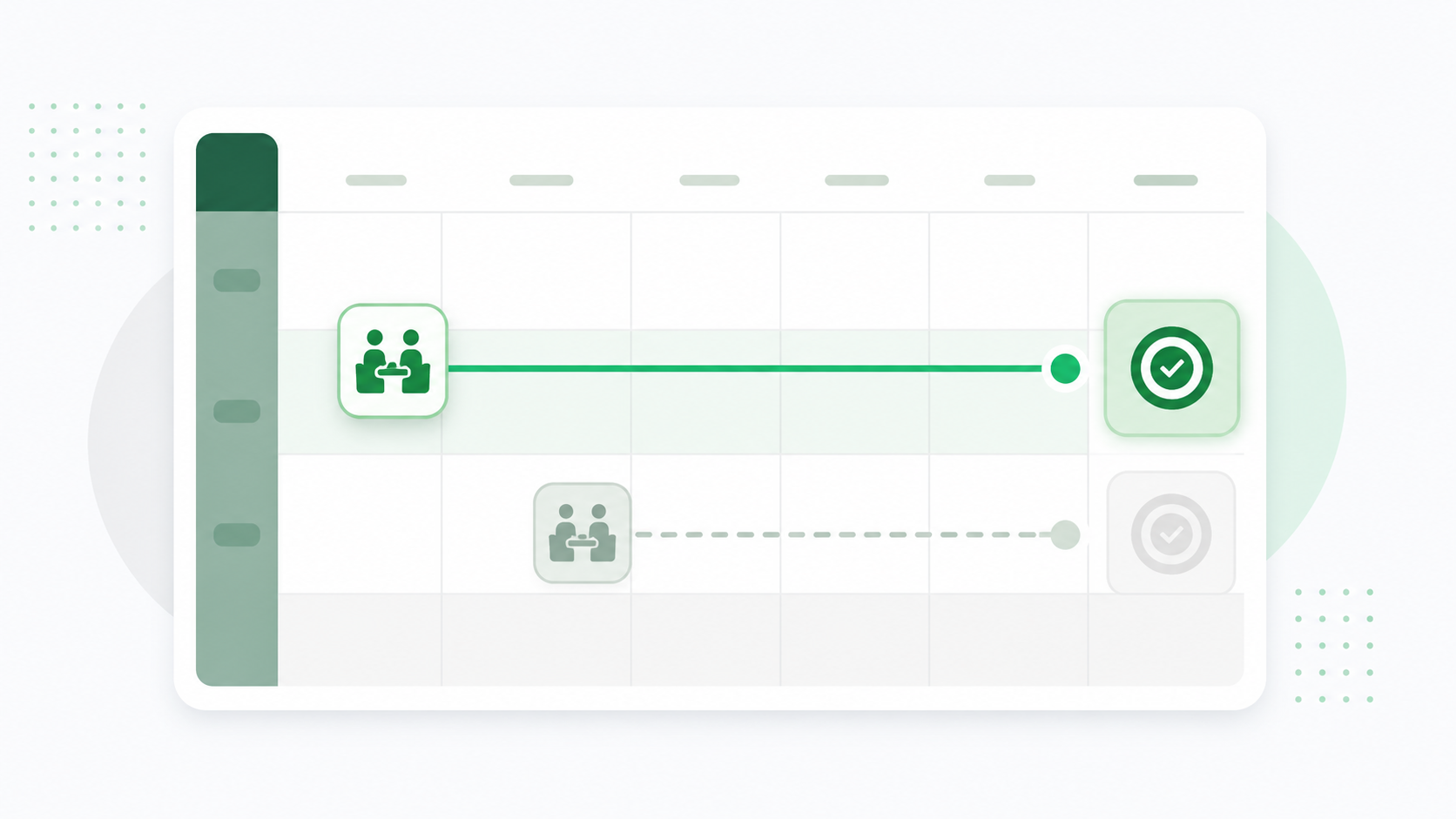
Acme Corp's CSM walked out of the QBR feeling good. The outcome slide landed, the VP nodded through the risk section, and the meeting ended early with everyone smiling on the call. Six weeks later, the renewal still hadn't moved. Procurement hadn't been looped in, no internal champion had picked up the file, and the good feeling from the meeting had nowhere to go because nothing specific had been agreed to act on it.
A QBR going well and a QBR converting into a renewal are not the same event, and the gap between them is where a lot of quarters get lost. The meeting can be genuinely good and still produce nothing, because a good meeting and a moving deal are different outcomes that require different things to happen.
Why a good meeting doesn't automatically move the renewal
Positive sentiment in the room is not the same as a commitment. A customer nodding along to an outcome slide is agreeing that the story is accurate, not agreeing to a next step, and those are separate things a CSM can easily conflate when the meeting felt warm. Without something concrete pinned down before the call ends, the meeting produces goodwill that fades within days and nothing that survives contact with the customer's actual internal process.
This is the same failure mode as a QBR that never asks for anything specific, covered in the piece on what executives actually want from the meeting. A good QBR and an asking QBR are not automatically the same QBR, and only the second one has anywhere to go afterward.
The two things that actually convert a QBR into a renewal
Timing is the first. A QBR held with enough runway before the actual renewal date leaves room for the customer's internal procurement process, budget approval, legal review, whatever their process requires, to actually happen before the deadline forces a rushed decision. A QBR held too close to the renewal date can go perfectly and still fail to convert, because there is no longer enough calendar left for the customer's own process to run.
An explicit next step is the second, and it has to be pinned down live in the meeting, not assumed afterward. Who owns the next action, what specifically happens, and by when, agreed out loud before anyone leaves the call. This is the same discipline as the specific ask that has to be decided before a QBR even starts, just extended to what happens after the meeting ends instead of only what gets said during it.
Three mistakes that cause the most damage
Treating a good QBR as the same thing as a renewal commitment
A CSM who leaves a positive meeting assuming the renewal is now on track has confused sentiment for progress. Nothing about a customer feeling good in the room obligates anyone on their side to move the paperwork, and without a named next step, that good feeling has no mechanism to turn into action once the call ends and their calendar fills back up.
Scheduling the QBR too close to the renewal date
A QBR run inside the final two or three weeks before a renewal date has already lost the ability to fix anything it surfaces. If the meeting uncovers a real risk or a real opportunity, there is no longer enough time left for the customer's process to respond to it, and the same conversation that would have shaped a proactive 90-day renewal runway instead becomes a last-minute scramble against a deadline nobody planned around.
Letting the follow-up date pass with no enforcement
A named owner and a named date are only as good as whatever actually happens when that date arrives. Most teams have no system flagging a missed QBR follow-up until a CSM happens to remember weeks later, by which point the customer's own momentum has already cooled. A next step with no enforcement behind it is functionally the same as no next step at all, just with better documentation.
"Accurate predictions and concise, actionable explanations of churn risk saving my team 2+ hours daily. I love that it reflects the right reasons accounts are at risk without us handcrafting a health score."
Wendy Zingher, VP of Customer Success · LambdaTest
What a realistic QBR-to-renewal workflow actually looks like
The QBR gets scheduled with at least six weeks of runway before the renewal date, not squeezed in whenever calendars happen to align. The meeting ends with one named action, one owner, and one date, stated out loud and confirmed by both sides before anyone hangs up. And the follow-up happens on that date, not whenever it eventually gets remembered, because a next step with no enforcement is just a good intention with a deadline nobody is tracking.
RetainSure tracks the next step so a good QBR doesn't quietly stall.
Named owner, named date, automatically followed up, so the meeting's momentum survives past the call itself.
Acme Corp's next QBR ended differently. The outcome slide landed the same way it always did, but this time the meeting closed with a named date for the procurement kickoff and a named owner on both sides. Three weeks later, the renewal was already in motion, not because the meeting felt any better than the last one, but because it left the room with somewhere specific to go.
How to check whether your own follow-ups actually happen on schedule
Pull the last ten QBRs that ended with a stated next step and check, for each one, whether that step actually happened by the date it was supposed to. Most teams running this for the first time are surprised by how many of their "good" QBRs quietly missed their own follow-up date, with nobody flagging it until the renewal itself was already at risk.
The fix doesn't require new tooling to start, just a habit: every QBR's named next step goes on a tracked list with its date, and someone checks that list weekly, not just when a renewal is already overdue. A missed date should surface the same week it's missed, not the week someone finally notices the account went quiet.