
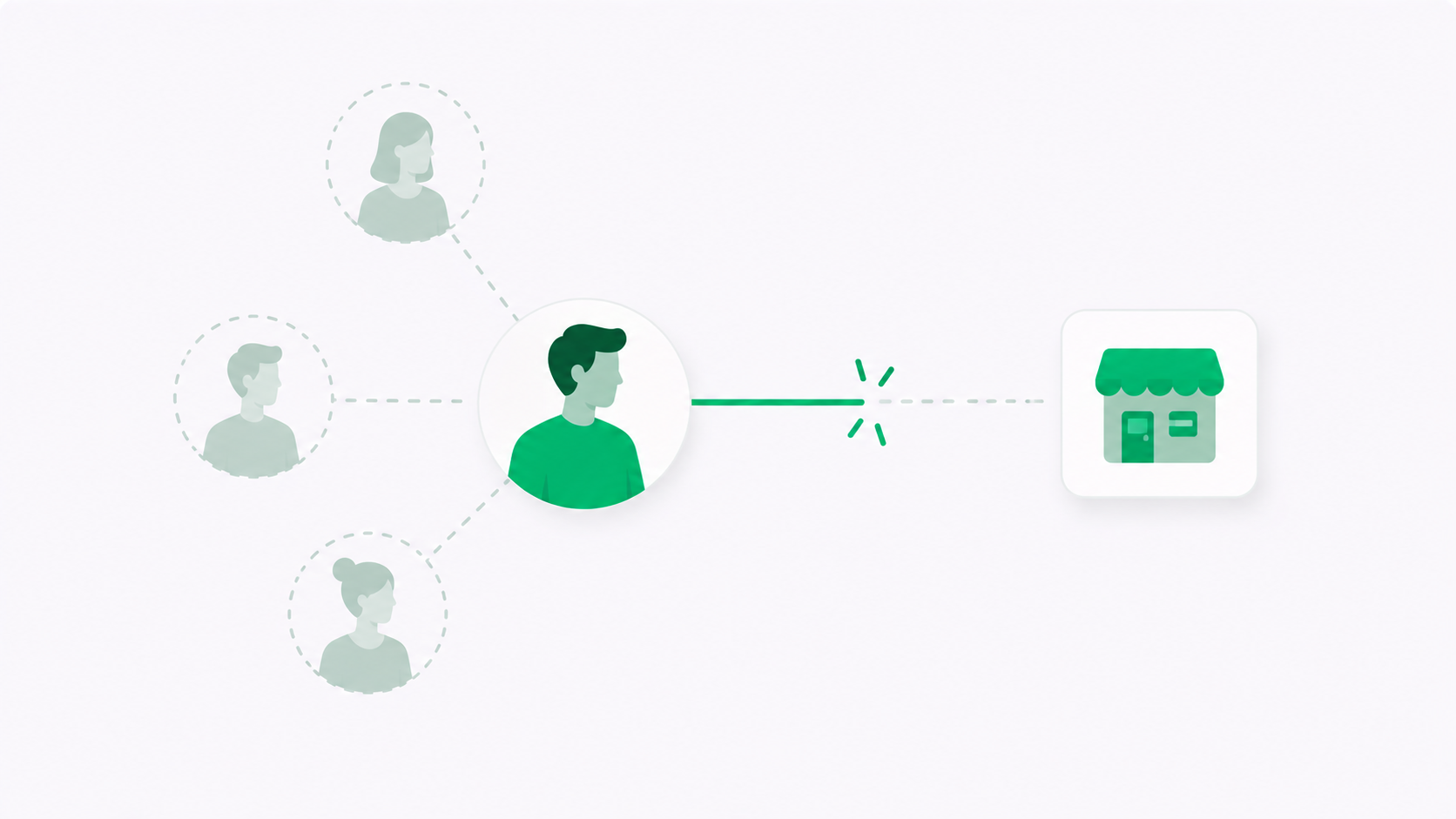
Acme Corp's CSM had a genuinely great relationship with one enterprise account. The champion answered every message within the hour, joined every call, and had personally pushed the deal through procurement eighteen months earlier. On every internal account review, this looked like the healthiest relationship in the book. Then the champion accepted a job at a competitor with two weeks' notice, and the account went completely dark. Nobody else on the customer's side had ever been in a call. Nobody else had a reason to answer an email from a vendor they'd never spoken to.
The product was still being used. Usage hadn't dropped. The relationship, the thing that actually determines whether a renewal happens, had been sitting entirely inside one person's inbox the whole time, and nobody noticed it was a single point of failure until the day that person was gone.
Why single-threading feels efficient right up until it isn't
A single strong relationship is genuinely more pleasant to manage than three or four moderate ones. One responsive champion means fast answers, easy scheduling, and a account that feels, from the CSM's side, like it basically runs itself. That ease is exactly what makes single-threading dangerous, because the account's health looks identical to a properly multi-threaded one on every metric a CSM checks day to day, right up until the one relationship the whole account depended on disappears.
The failure is invisible by design. There's no dashboard metric for "how many humans on the customer's side would still take our call if this specific person left tomorrow," and even a well-built health score has no way to see it either, so the risk accumulates silently in exactly the accounts that look the healthiest, the ones with one deeply engaged champion and nobody else in the picture.
Why it happens by default, not by neglect
Nobody sets out to build a single-threaded account. It happens because CS naturally deepens the relationship with whoever is most responsive and most enthusiastic, which is a reasonable instinct, but it optimizes for the wrong variable. The most responsive contact is not necessarily the most durable one, and the person most excited about the product today is not necessarily still at the company, or still in a role that matters, by the time the renewal comes up eighteen months later.
The other contributing factor is that reaching out to a second or third stakeholder feels, in the moment, like unnecessary friction on an account that's already going well. Why introduce a new contact and add scheduling overhead to a relationship that's working fine. That logic holds right up until the working relationship is the only one that exists, and it stops working the exact week the account needs it most.
Three mistakes teams make on multi-threading
Each of these comes from treating one good relationship as sufficient coverage instead of a starting point.
Treating one great champion as full account coverage
A single enthusiastic advocate feels like more than enough relationship depth, especially when that person has real internal influence. But influence tied to one person is influence that leaves the building the day they do, and an account with one relationship has zero relationships the moment that one is gone.
Only meeting new stakeholders reactively
Most teams do eventually meet a second or third contact, but only after a crisis forces it, a champion goes quiet, a renewal stalls, a reorg gets announced. Meeting a new stakeholder for the first time during a crisis is the hardest possible context to build a relationship in, since there's no existing trust to draw on and the conversation is starting from a position of risk instead of routine.
Over-correcting into shallow contact with everyone
The opposite failure is real too: a CSM who tries to "multi-thread" by adding a dozen names to a mailing list with no real relationship behind any of them. A long list of contacts who've never had an actual conversation with the CSM provides the appearance of coverage without the substance of it, and doesn't hold up any better than a single deep relationship when it's actually tested.
"RetainSure put LimeChat's customer success program on steroids. MBR preparation that used to consume the entire last week of the month now takes 2 minutes per customer. The AI delivers everything the team needs, data, insights, and next steps, so they can focus on driving real outcomes."
Sridhar Kowtal, Head of Customer Success · LimeChat
What real multi-threading actually looks like
The minimum viable version isn't a dozen shallow contacts, it's three real relationships covering three distinct roles: the economic buyer who controls the renewal decision, the day-to-day power user who feels the product's value directly, and a technical or IT stakeholder who can speak to implementation and security concerns if either comes up. Each relationship doesn't need the same depth as the primary champion, but each needs to have had at least one real conversation, not just an email thread cc.
The cadence matters as much as the roster. A stakeholder met once during onboarding and never touched again is barely better than no relationship at all eighteen months later. A light quarterly touchpoint, a two-line check-in, an invite to a relevant webinar, a note when something ships that affects their specific role, keeps each relationship warm enough that a first real conversation isn't happening for the first time during a crisis, using the same discipline that keeps stakeholder data itself from going stale.
RetainSure flags accounts running on a single relationship before the champion walks out the door.
Reads call and email patterns to surface when only one person on the customer side is actually engaged.
How to audit your own book for single-threaded exposure this week
Pull the ten largest accounts by contract value and count, for each one, how many distinct people on the customer side have had a real conversation with anyone at Acme Corp in the last quarter, not cc'd on an email, an actual conversation. An account with a count of one is carrying the exact risk that took down the account in this post, regardless of how healthy every other metric on that account currently looks.
For every single-threaded account the audit surfaces, the fix isn't a dramatic outreach campaign or a full headcount conversation, it's one deliberate introduction this month: a reason to loop in the power user directly, a reason to get the technical stakeholder on a call about an upcoming feature. Small, low-friction, and done before the account needs it, not after the one relationship it depended on is already gone.
Acme Corp ran that audit across its top twenty accounts the month after the dark-champion account churned. Six came back single-threaded. Every one of them got a second relationship built within the quarter, not through a formal program, just a deliberate reason to talk to someone new. None of the six has gone dark since. The product never changed. Who Acme Corp actually knew inside each account did.