
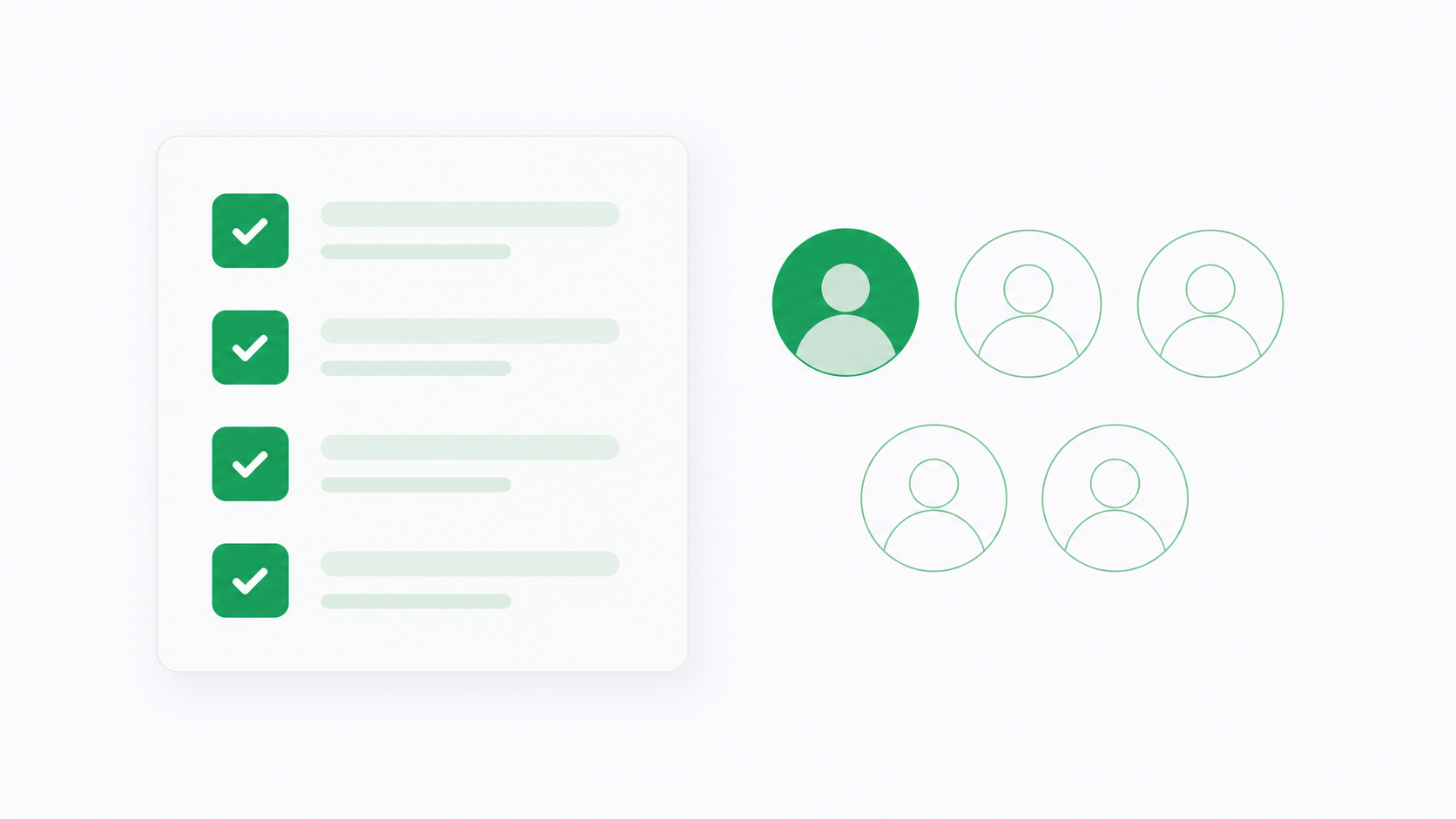
Acme Corp's onboarding checklist hit 100% within the first week: integration connected, users provisioned, first workflow configured. Every box was green. Five months later the account didn't renew, and the postmortem turned up something the checklist had never once asked about: the admin who did the setup was the only person who had ever logged in. Nobody on the actual team the tool was bought for had touched it, not once, in five months.
Onboarding checklists measure whether setup happened. They almost never measure whether the account is actually on track to stick around, and those turn out to be two very different questions with two very different answer sets.
Why "onboarding complete" checklists don't predict retention
A setup checklist tracks steps a single implementer can complete alone: connect the integration, invite the users, configure the first workflow. All of that can hit 100% without a single end user ever forming a habit around the product, because the checklist was designed to verify configuration, not adoption. It answers "did the technical work get done," which is necessary but nowhere close to sufficient for an account that is actually going to renew.
The gap shows up months later, usually right around the point a health score would first have a chance to flag it, if anyone had been tracking the right signal from day one instead of just the setup checklist.
The three things onboarding should actually establish to prevent churn later
First, a defined business outcome tied to why the account bought in the first place, stated in terms specific enough to check later: not "improve efficiency" but a number, a workflow, a result someone can point to in six months and say yes or no to. Second, engagement from someone beyond the admin who did the setup, because a tool used by one implementer and nobody else is not adopted, it is configured. Third, an early usage pattern that matches what healthy actually looks like for that specific account type, not a generic company-wide average that flatters accounts using the product in a way that was never going to stick.
All three of these need to be established during onboarding itself, while there is still time to correct course, not discovered for the first time when the stakeholder map turns out to have been one person deep the entire time.
Three mistakes that cause the most damage
Treating 100% checklist completion as proof of adoption
A green checklist feels like a finished job, and that feeling is exactly what lets a single-user account slip through onboarding unnoticed. Completion is a fact about configuration. Adoption is a fact about people, and nothing on a standard setup checklist actually measures the second one.
Never widening past the person who did the setup
If onboarding ends the moment the admin finishes configuring the tool, nobody has confirmed the account's actual end users even know it exists. This is the same blind spot that shows up later as a stakeholder map that never got beyond the original signer, covered in the piece on early warning signals, except here it is happening at month one instead of month nine, while it is still cheap to fix.
Setting the outcome once and never checking it again
A business outcome captured on a kickoff call and never referenced again for the rest of onboarding is barely better than not capturing one at all. If nobody revisits it before onboarding closes to confirm the account is actually tracking toward it, the outcome becomes a line in a kickoff doc instead of the thing onboarding was actually organized around achieving.
"RetainSure put LimeChat's customer success program on steroids. MBR preparation that used to consume the entire last week of the month now takes 2 minutes per customer. The AI delivers everything the team needs, data, insights, and next steps, so they can focus on driving real outcomes."
Sridhar Kowtal, Head of Customer Success · LimeChat
What a realistic onboarding-to-retention handoff actually looks like
The setup checklist still gets tracked, because configuration still has to happen. Alongside it, three questions get answered before onboarding is declared done: is there a specific, checkable outcome on record, has more than one person actually logged in and used the product, and does early usage look like the pattern healthy accounts of this type actually show. If any of the three is missing, onboarding is not finished, no matter how many boxes are checked.
RetainSure flags single-user onboarding before the account ever reaches renewal.
Adoption breadth and early usage pattern tracked alongside setup completion, not instead of it.
Acme Corp's next onboarding didn't stop at a green checklist. Three weeks in, the CSM noticed only the admin had logged in and reached out directly to the two other named users on the account, walking them through their first workflow personally. Both were active within the week, and the account's health score reflected something the setup checklist never could have shown.
How to check whether your own onboarding is actually catching this
Pull the last ten accounts that finished onboarding and check two things for each: how many distinct users logged in by the end of week two, and whether the original business outcome was ever referenced again after the kickoff call. Most teams running this for the first time find a meaningful share of "successfully onboarded" accounts that never cleared either bar, sitting in the book looking healthy on a checklist that was never built to catch the gap.
The fix doesn't require rebuilding the onboarding process, it requires adding two checkpoints to the one that already exists: a week-two user-count check, and a pre-close confirmation that the recorded outcome is still on track. Both take minutes to run and neither depends on new tooling to start.