
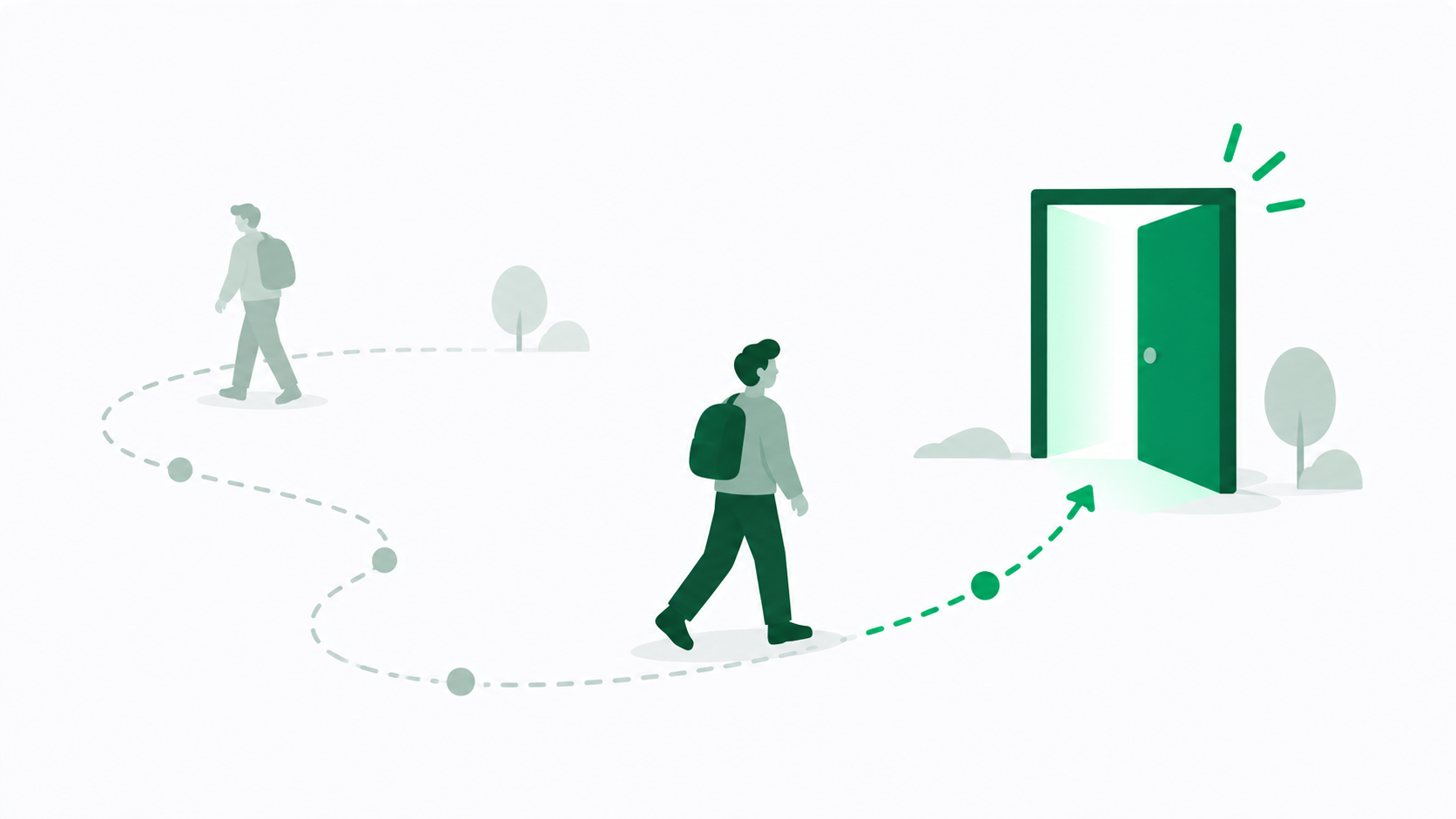
Eight months after an account canceled, its old champion emailed Acme Corp's original CSM asking, almost apologetically, whether the plan they used to be on was still available. The competitor they'd switched to had quietly raised prices twice and cut support response times in half. Nobody at Acme Corp had spoken to that account since the cancellation call. The email only found a warm reply because the original CSM happened to still work there and happened to still have the thread, not because of anything resembling a process.
That account came back. A meaningful number of accounts like it don't, not because they wouldn't have, but because nobody was watching for the signal, and by the time someone thought to reach out, the moment had already passed.
Why win-back gets treated as sales' job, not CS's
Once an account churns, most companies' internal ownership quietly reverts to sales, on the logic that closing a deal, even a former customer's second deal, is fundamentally a sales motion. That handoff loses the one thing that actually makes a win-back conversation different from a first-time sale: the specific, detailed knowledge of why this particular customer left, which only ever lived with the CSM who worked the account.
A sales rep re-engaging a churned account cold, the same way they'd approach any new prospect, has to rediscover the objection from scratch, often getting a generic, guarded response because the customer doesn't yet trust that anything has actually changed. A CSM re-engaging the same account can reference the specific reason they left directly, which signals the conversation has actually been thought through rather than being a templated "we miss you" email pulled from a list of lapsed logos.
Why churned accounts actually come back
It's rarely because the original product changed enough to matter. It's because the customer's situation changed: the competitor they switched to disappointed them, the internal reason for canceling, a budget freeze, a reorg, resolved itself, or the specific person who drove the original decision to leave changed roles or left the company. None of those triggers are things a vendor controls, but all of them are things a vendor can watch for, if anyone's actually watching.
That reframes win-back from "convince them to come back" to "be visible and ready the moment their situation changes," which is a fundamentally lower-effort, higher-patience motion than most companies run, and it explains why a light, well-timed touch usually outperforms an aggressive win-back campaign launched the month after cancellation, before the customer's situation has had any chance to change.
Three mistakes teams make with churned accounts
Each of these either burns the relationship early or misses the window when it reopens.
Treating a churned account as dead
The moment a cancellation is processed, most CRMs move the account to a closed status that nobody ever looks at again. That status change is administratively convenient and strategically wasteful, since it treats a customer who liked the product enough to sign up once as permanently uninterested, rather than as someone whose circumstances might simply change.
Reaching out with a generic "we miss you"
An outreach that doesn't reference the actual reason the customer left reads as a mass campaign, not a considered follow-up, and invites the same objection that caused the churn in the first place, unaddressed. The stronger version names the original reason directly and says specifically what's different now, even if what's different is small.
Waiting for them to come back instead of watching for signals
Most win-back conversations that happen at all happen because the customer reached out first, which means the company is entirely dependent on the customer remembering to do so and finding the right person to email. A team that proactively watches former customers for public signals, a leadership change, news about the competitor they switched to, catches the window months before the customer would have thought to reach out on their own.
"Accurate predictions and concise, actionable explanations of churn risk saving my team 2+ hours daily. I love that it reflects the right reasons accounts are at risk without us handcrafting a health score."
Wendy Zingher, VP of Customer Success · LambdaTest
What a real win-back motion actually looks like
The lightest effective version is a simple watchlist, not a campaign: every churned account, the specific reason they left, and a light, infrequent touchpoint, a relevant product update, a note when something ships that would have addressed their original objection, timed at a cadence that reads as thoughtful rather than desperate. Quarterly is usually enough. The goal isn't conversion on any single touch, it's staying visible enough that the customer thinks of Acme Corp first if their situation changes.
Layered on top of that light-touch cadence, watching for the specific triggers that actually predict a return, a leadership change at the account, public news about the competitor they switched to, is what turns a passive watchlist into an active one, surfacing the right moment to reach out with something more direct than a quarterly nudge.
RetainSure keeps the original churn reason attached to every lapsed account, not lost the day the CRM status changes.
So a win-back conversation eight months later starts from context, not from scratch.
How to build a win-back watchlist this week
Pull every account that churned in the last eighteen months and, for each one, write down the actual reason in one sentence, not a CRM status code but the real, specific answer a CSM would give if asked. That single exercise usually surfaces accounts nobody has thought about since the cancellation call, several of which left for reasons that map cleanly to the same signals a health score would catch today, and may no longer even apply.
Assign each one a light quarterly touchpoint and a named owner, ideally the original CSM if they're still with the company, since they carry the context that makes the eventual outreach land as considered rather than generic. The list doesn't need a platform or a formal program to start, it needs someone checking it once a quarter and one sentence of real context next to every name on it.
Acme Corp built that list the same week the eight-months-later email came in, working backward from every churn in the past year and a half. Two accounts came back within the first quarter of running it, both after a light, specific touchpoint that named the reason they'd left in the first place. Neither reply came from a mass campaign. Both came from someone who'd actually been watching.